
If you have been fighting musty smells, recurring allergies, or a coil that seems to grow mold no matter how many times it is cleaned, there is a solution that most homeowners have never heard of, an HVAC UV light installed inside the system. It is a quiet, proven technology that has been used in hospitals, laboratories, and commercial buildings for decades, and it is now increasingly common in residential homes across the Dallas-Fort Worth metroplex.
In this guide, we will explain exactly what an HVAC UV light is, how it works inside an air conditioning system, why DFW's climate makes it especially valuable, and what to expect when a trained HVAC technician installs one in your home.
What Is UV Light Installation?
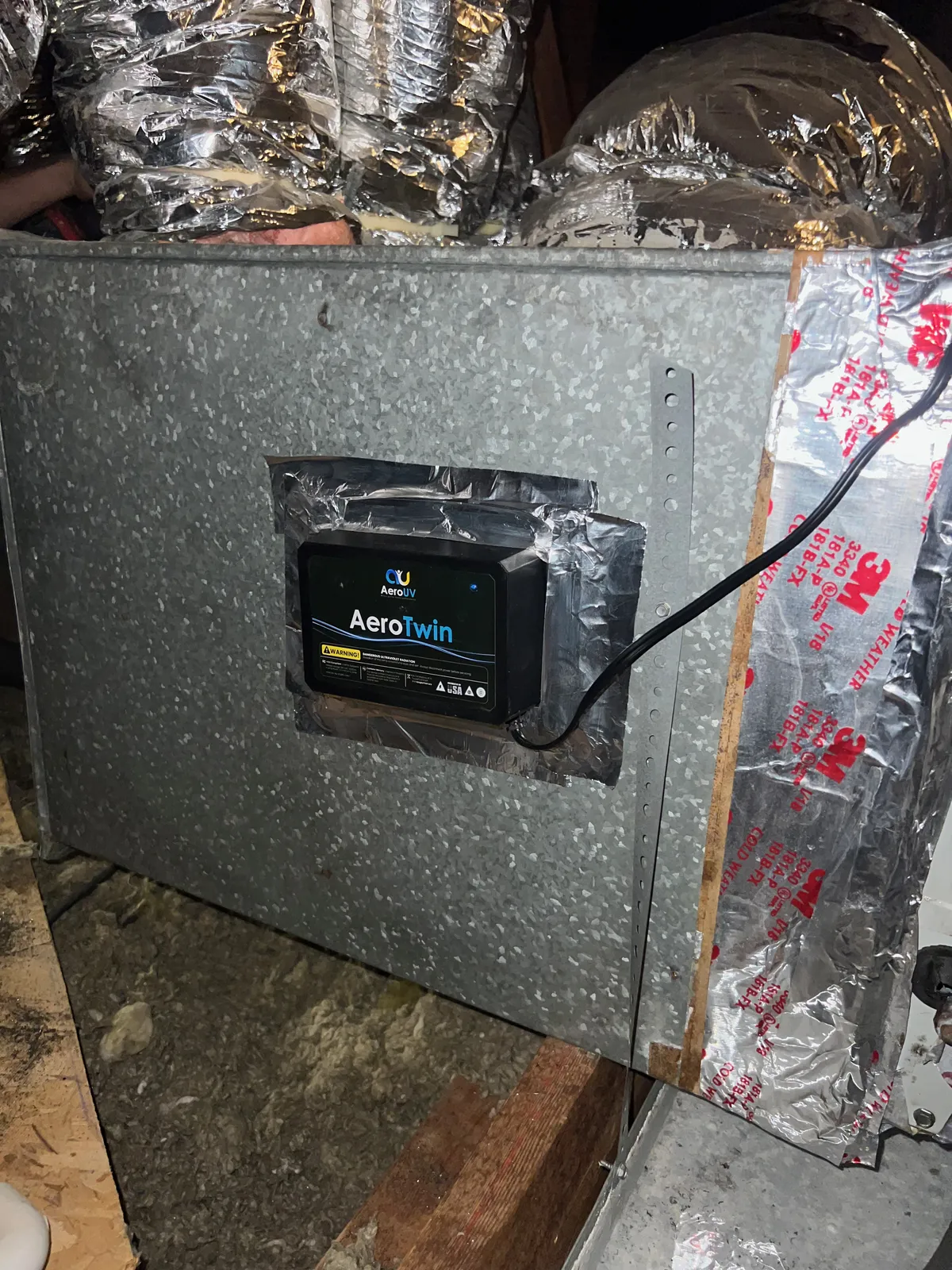
An HVAC UV light installation is the professional placement of one or more ultraviolet germicidal lamps inside your system to continuously sterilize the air and surfaces as air passes through the unit. The lights emit a specific wavelength of ultraviolet-C radiation that destroys the DNA and RNA of airborne microorganisms, including bacteria, viruses, mold spores, and fungi. ASHRAE notes in its filtration and disinfection resources that ultraviolet energy inactivates viral, bacterial, and fungal organisms so they are unable to replicate.
The lamps are installed in one of two primary locations, either directly above the evaporator coil where mold and bacteria tend to colonize on the cold wet metal, or inside the return air duct where the light can treat air in motion as it passes by.
Why This Technology Exists
Your HVAC system is one of the most hospitable environments for mold in your entire home. It is dark, cool, moist, and constantly circulating organic material. UV light installation addresses this at the source by preventing colonization from ever taking hold.
How HVAC UV Light Works
Trained HVAC technicians design UV installations around three variables, wavelength, placement, and exposure time. When all three are correct, the system provides continuous protection with no action required from the homeowner.
UV-C Wavelength
The lamps produce ultraviolet light in the UV-C range, specifically around 254 nanometers. This is the wavelength that disrupts microbial genetic material. It is not the same as the UV-A or UV-B that causes sunburn, and it is fully contained inside your HVAC equipment where it never reaches occupied spaces.
Coil Sterilization
Coil-mounted lamps run continuously, bathing the evaporator coil surface in UV-C light. Because the coil is wet with condensate during cooling season, it is the prime location for biofilm growth in any HVAC system. UV light kills mold and bacteria on contact, keeping the coil clean and preserving heat transfer efficiency.
In-Duct Air Sterilization
Duct-mounted systems target the air itself. As air passes through the UV treatment zone, microorganisms in the airstream are inactivated. This approach works best with higher-output lamps and proper placement relative to airflow patterns.
Maintenance Cycle
UV lamps gradually lose output over time. Most systems use lamps that need replacement every twelve to twenty-four months depending on the model. A trained HVAC technician includes this in your annual service.
Signs Your DFW Home Needs UV Light Installation
Not every home needs an HVAC UV light, but certain warning signs make it a strong investment.
- Musty or moldy smell when the AC runs
- Visible mold or dark staining on or near the evaporator coil
- Recurring allergies or asthma symptoms that peak indoors
- Family members with weakened immune systems
- A coil that clogs with biofilm between cleanings
- High indoor humidity that will not come down
- A previous water leak in the air handler or near the unit
- You just moved in and the system smells stale
If you see two or more of these, UV installation is worth a serious look.
Why DFW Climate Makes UV Especially Valuable
The Dallas-Fort Worth climate is uniquely hard on HVAC evaporator coils. Between spring and fall, the AC runs almost continuously, pulling warm humid air across a cold metal coil. That coil stays wet for weeks at a time, and anything organic that passes through, pollen, skin cells, dust, pet dander, has a perfect surface to stick to and grow on. An HVAC UV light shines on that wet coil around the clock, so growth never gets a chance to take hold.
Add in DFW's long allergy seasons, frequent dust storms from the west, and the common practice of running the AC in the mild winter months, and you have a system that rarely gets the dry rest period that would naturally kill off microbes. This is why DFW homes experience coil biofilm and duct mold at rates higher than most of the country.
UV light solves the underlying cause. Instead of cleaning a coil every year and watching it recolonize, the coil stays sterile continuously. Many homeowners who install UV see a noticeable improvement in indoor air quality within a few weeks.
What to Expect From a Technician Visit
A professional UV light installation typically takes between one and two hours. A trained HVAC technician will arrive with the UV lamp assembly, mounting hardware, a properly-rated electrical connection, and any ducting tools needed for in-duct installations.
They will turn off power to the air handler, mount the lamp in the optimal location based on your specific unit geometry, wire the power supply to the blower circuit so the light runs whenever air moves, and test the installation to confirm the lamp is operating correctly. Before leaving, they will walk you through the lamp replacement schedule and show you how to visually verify the lamp is on.
Why Professional Installation Beats DIY
UV light kits are sold online, and homeowners sometimes attempt their own installations. This is one of the worst DIY projects to take on for several reasons.
First, improper placement does nothing. A UV lamp positioned wrong might as well not be there, the light has to reach the coil or the airstream at the right angle and intensity to be effective. Second, UV-C light is harmful to human eyes and skin with direct exposure. A properly installed lamp is contained inside the air handler where no one ever sees it. A poorly installed lamp can leak UV into occupied spaces.
Third, cutting into an air handler or duct requires care to avoid damaging the coil, refrigerant lines, or sensors. Fourth, the lamp draws continuous power and needs to be wired to the correct circuit with proper safety disconnects.
Trained HVAC technicians handle all of this as standard practice and leave behind an installation that is safe, effective, and maintainable.
Frequently Asked Questions
Is UV light safe for my family?
Yes. Properly installed UV-C lamps are contained entirely inside the HVAC system where no one is ever exposed. The light never enters occupied living spaces.
Will UV light replace my air filter?
No. UV light and air filtration solve different problems. Filters capture particles like dust and pollen. UV light inactivates living organisms. The two work best together.
How often do the lamps need to be replaced?
Most residential UV lamps should be replaced every one to two years. Output drops over time even if the lamp still appears to be lit.
Does UV light use a lot of electricity?
No. A typical residential UV lamp draws the same power as a small light bulb, usually less than a dollar per month in electricity.
Can UV light eliminate mold in my ducts?
UV lamps sterilize what the light actually reaches. Coil-mounted lamps keep the coil clean. In-duct lamps help with air in motion. For existing mold colonies in ductwork, professional cleaning is also needed.
Schedule Your Free Inspection Today
If you have been battling mold, musty smells, or recurring indoor air quality issues, an HVAC UV light may be the permanent solution you have been looking for. Our trained HVAC technicians will evaluate your system, identify the right UV solution for your home, and explain your options clearly.
For related services, see our city pages for HVAC air purification across the DFW metroplex.
Call (469) 444-1064 today to schedule your free inspection.