
Furnace Cleaning in Dallas-Fort Worth
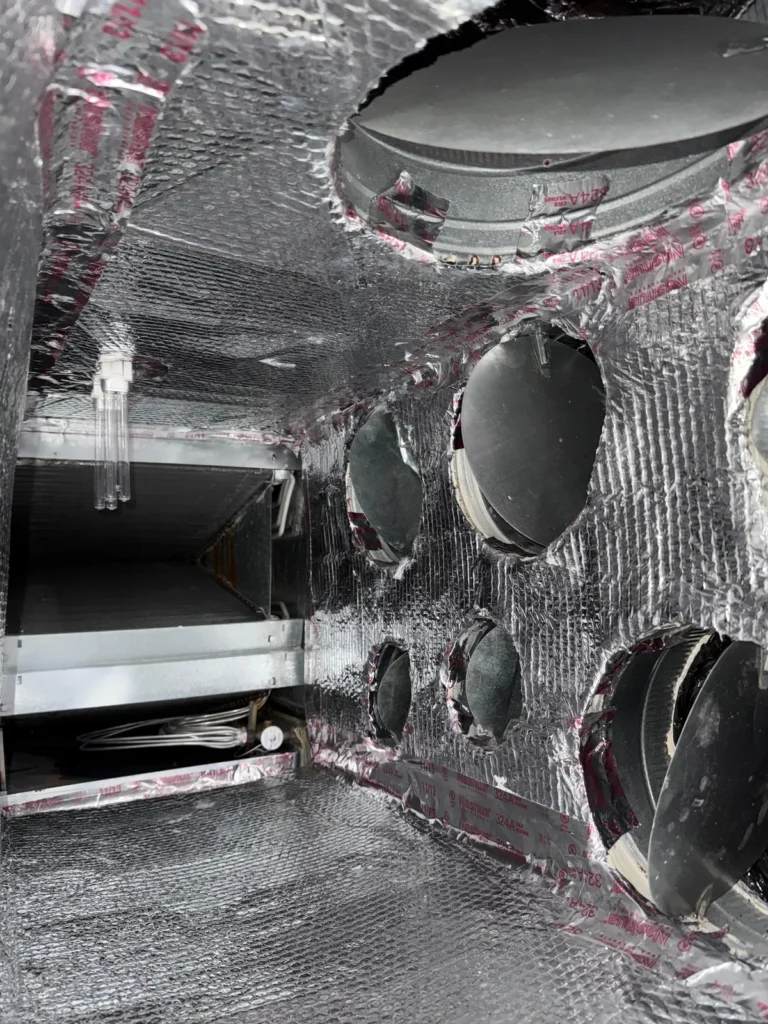
A technician comes out, opens the cabinet, photographs what is actually inside your blower and coil, and gives you a flat price on the spot. The inspection costs nothing. We work the air side: blower wheel, blower compartment, coil face, plenum, return box, filter track and duct runs. Gas work is not ours, and we say so before you book.
- Blower wheel, blower compartment and coil face cleaned
- Plenum, return box and duct runs opened and cleaned
- Before and after photos of what we actually found
- Free on-site inspection, then a flat quote before any work
- Air side only, so no surprise gas-side upsell
100% satisfaction commitment. Real work you can see, with before and after photos on every job.
Or call us now: (469) 444-1064
Furnace and air handler cleaning across Dallas, Fort Worth, Plano, Frisco, McKinney and the rest of the DFW metro.
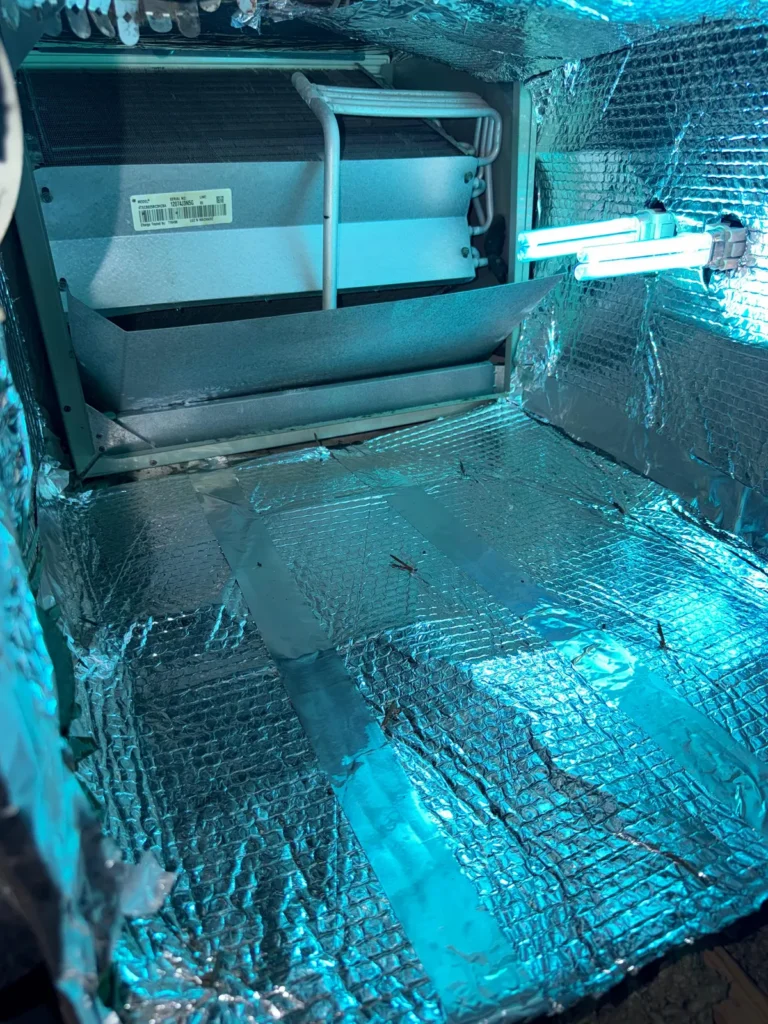
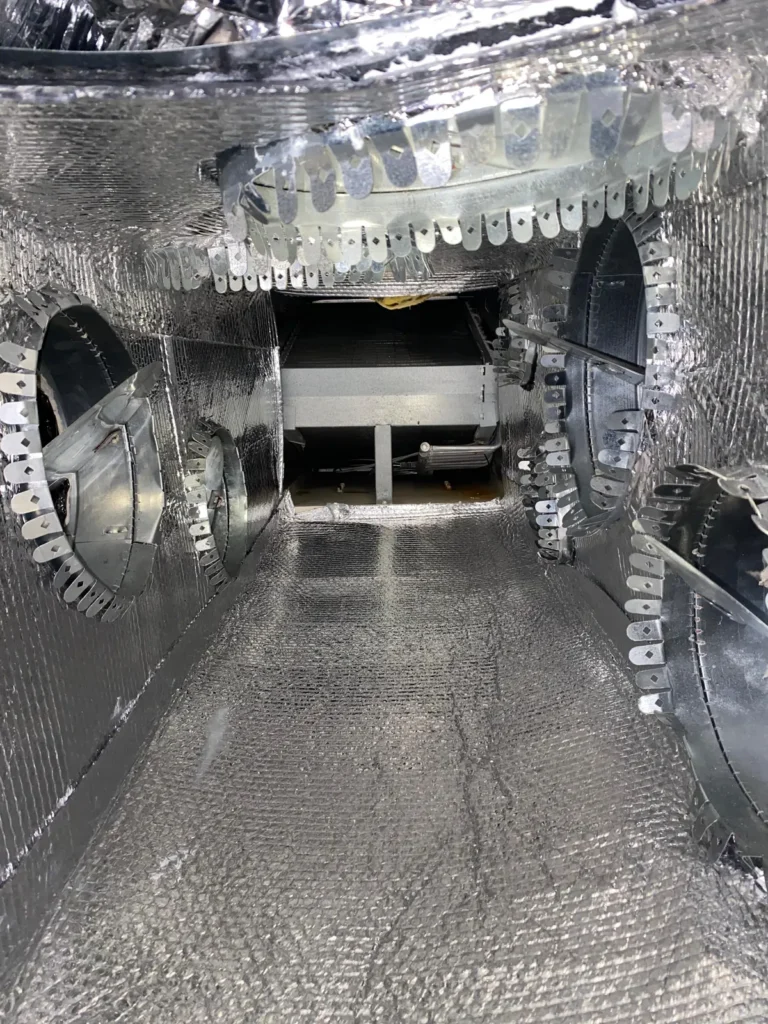
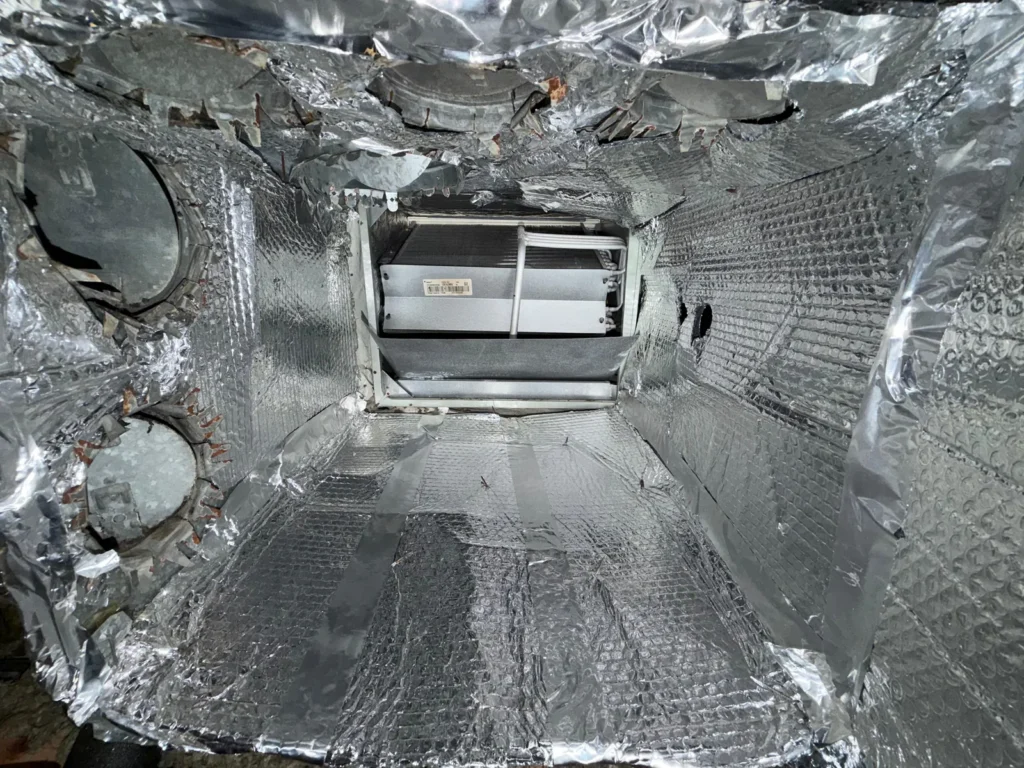
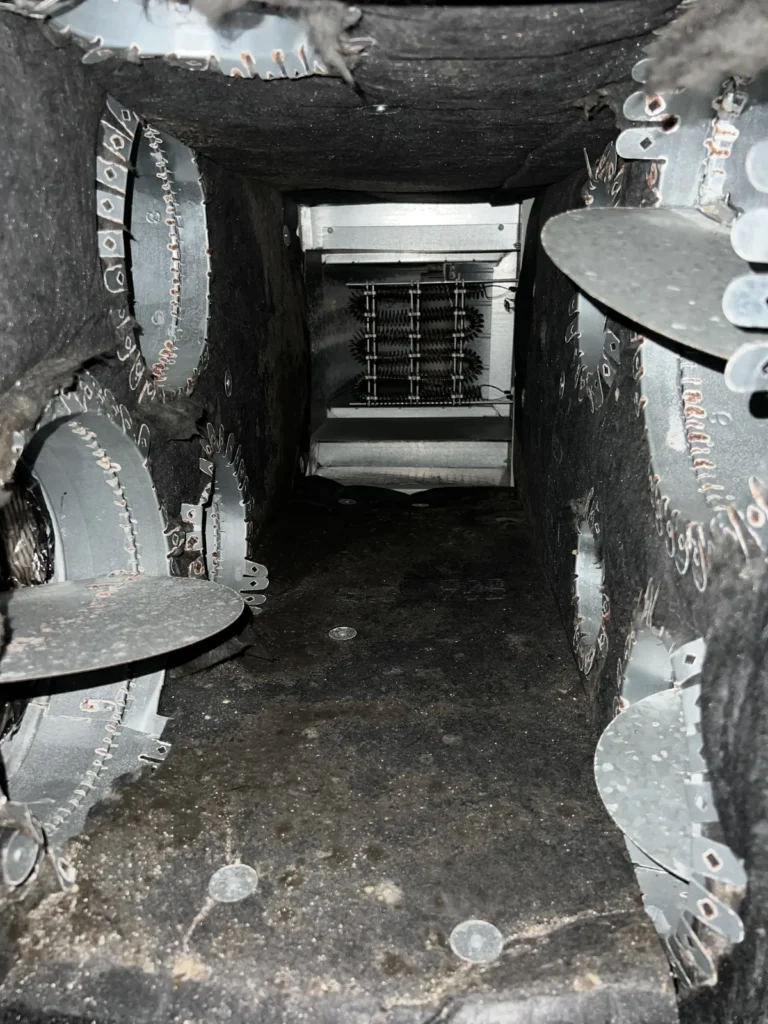
What Gets Cleaned on a Furnace Visit
Every visit starts with an inspection of the air path, then the cleaning. One goal: get the restriction out so the system moves the air it was built to move.
- The blower wheel, blade by blade. Dust packs into the curve of each blade and the wheel stops throwing the air it was built to throw.
- The blower compartment and motor housing. The furnace manufacturer manual tells the installer to check motor windings for dust that may cause overheating.
- The coil face on the return side, where a leaking filter slot has been letting dust through for years.
- The supply plenum, including seams and takeoff collars.
- The return box and the return drop, which pull in more dust than anything else in the house.
- The filter track, including the gap around a filter that sits loose in an oversized slot.
- Supply boots and registers, room by room.
- The duct runs, with seams and connections photographed as we go.
- Supply and return temperatures read and compared to the rise printed on the rating plate.
- A written list of what we found, with the photos, before we leave.
Often Done in the Same Visit:
- Full duct cleaning while we are already at the equipment
- Return box sealing where the drop is pulling unfiltered air
- Air duct sanitizing after the clean
- UV light at the coil for systems that stay damp
- Dryer vent cleaning on the same trip
The inspection is free and the quote comes before anything is scheduled. Nothing gets done that you did not agree to first.
Gas Furnace or Electric Air Handler? It Changes by City
Almost every furnace cleaning page you will read assumes your house burns gas. Across Dallas County that is wrong most of the time: the Census Bureau American Community Survey counts 61.8 percent of occupied homes heating with electricity against 36.2 percent on utility gas. And the county average hides how far one city sits from another. Here is the actual spread across cities we serve.
Cedar Hill
19.4 percent
Three homes out of four here heat with electricity, so most visits start at an air handler rather than a gas furnace. Median year built is 1995, so the equipment has usually been changed once while the duct layout is still the builder's.
Haltom City
23.7 percent
Also strongly electric. Median year built 1978, so these are older houses on original duct layouts with equipment that has been replaced more than once, and the filter arrangement is often the first clue that something does not match.
The Colony
27.7 percent
Mostly electric, median year built 2001. Two gas suppliers operate here, so a gas meter on the wall tells you less than people assume. We confirm what the equipment actually is before quoting.
Duncanville
37.9 percent
A real mix. Median year built 1978, so expect original trunk lines, undersized returns and a fair number of retrofit equipment swaps that never got matching duct work.
Rowlett
56.3 percent
Gas is the majority here. Median year built 1997. More real gas furnaces means more houses where the burner section is off limits to us and the air path around it is exactly what we clean.
Allen
55.2 percent
Gas majority, median year built 2003. Two suppliers serve the city. Newer construction usually means attic equipment with long flex runs, so the return side is where the dust shows up.
Coppell
54.7 percent
Gas majority, median year built 1994. Thirty-year-old duct systems on newer equipment is the common pattern, which is where a static pressure problem hides.
Prosper
67.8 percent
The most gas-heavy city on this list, and the mirror image of Cedar Hill. Median year built 2014. Newest housing, newest equipment, and the issues are build-out debris and unsealed collars rather than decades of dust.
Source for the gas and electric shares is the Census Bureau American Community Survey, and for the suppliers the Railroad Commission of Texas. One caution we will repeat on the phone: the Commission counts more residential gas meters than the Census counts gas-heated homes, because a meter can be feeding only a water heater or a range. A gas meter does not mean the furnace burns gas, so we check the equipment instead of guessing.
How a Furnace Cleaning Visit Works
Three steps, and the first one costs nothing.
Free Furnace Inspection, On Site
A furnace inspection in Dallas-Fort Worth starts with us opening the cabinet: the blower wheel, the coil face, the plenum, the return box and the filter track. We photograph what is in there and you see the photos on the spot. Then you get a flat quote for the cleaning, before anything is scheduled. The inspection itself costs nothing.
The Cleaning
Blower wheel and blower compartment, coil face, plenum, return box and return drop, filter track, supply boots and registers, and the duct runs. We work the whole air path in one visit, because cleaning the blower and leaving the runs packed just means clean air travelling through the dirty part.
Verification and Photos
We read supply and return temperatures and compare the rise to the range printed on the rating plate, because the manufacturer says an incorrect temperature rise can cause condensing in or overheating of the heat exchanger. You get the before and after photos and a written list of what we found.
Signs the Heating Side Needs Cleaning
Any one of these is worth a phone call. The furnace manufacturer is direct about the usual cause: improper filter maintenance is the most common cause of inadequate heating or cooling performance.
Burning Dust Smell That Does Not Go Away
The first burn of the season smells like hot dust for a day or two on almost every system. If it is still there after a week, there is dust sitting somewhere it should not be.
One Room Never Keeps Up
The room farthest from the equipment stays cold while the room nearest to it overheats. That is an airflow distribution problem, and a restricted blower or a leaking plenum is a common cause.
The Filter Loads Up in Weeks
A filter that looks grey a few weeks after you changed it usually means the return side is pulling unfiltered air from somewhere, often around a filter that sits loose in an oversized slot.
Weak Air at the Register
The blower sounds like it is working harder than it used to and the air coming out still feels soft. Dust packed into the curve of the blower blades is one of the first things to check.
Dust Puffs Out When the Blower Starts
A visible puff at the register the moment the system kicks on means loose debris is sitting in the duct runs or the plenum, not just on the filter.
Long Run Times Without Reaching Temperature
The system runs and runs and the thermostat never gets there. Airflow is what moves the temperature rise, and a restricted air path shows up here first.
A Yellow, Lazy Burner Flame
The manufacturer says burner flames should be stable, quiet, soft and blue with slightly orange tips, and should not be yellow. This one is not our work. Call a heating contractor and we will say so.
Nobody Has Opened It in Years
The manufacturer says the system should be inspected at least once per year, at the beginning of the heating season. If that has not happened in several years, the inspection is free and worth doing.
Common Signs in DFW Homes
These are the air-path problems that show up again and again in North Texas houses.
A blower wheel packed solid in a 1970s to 1990s suburban house
Decades of running with a filter that did not seal leaves dust packed into the curve of every blade. The wheel spins at the same speed and moves noticeably less air. This is the single most common thing we open a cabinet and find, and it is the reason the rooms at the end of the run never keep up.
A return box pulling air from the attic instead of the house
Where the return drop meets the equipment, the joint has opened up or was never sealed. The system pulls hot attic air and attic dust straight past the filter. The filter looks dirty in weeks, the coil face loads up, and the house never feels right no matter how often you change filters.
A coil face loaded behind a filter slot that leaks
An oversized or bent filter slot lets air bypass the filter completely. Everything the filter was supposed to catch lands on the coil face instead. Static pressure climbs, the blower works harder, and the temperature rise drifts outside the range printed on the rating plate.
Build-out debris and unsealed collars in a 2000s or newer home
Newer houses are not clean houses. Drywall dust, sawdust and insulation fibre from the build sit in the runs, and takeoff collars at the plenum often were never fully sealed. A single thorough visit usually settles a newer system for years.
Need Furnace Cleaning in DFW? The Inspection Is Free
Call now or request your free on-site inspection. We look at the blower, the coil, the plenum and the return box, show you the photos, and give you the quote before anything is scheduled.
Why Homeowners Call Us for the Air Side
We are a duct company, and that is the point. The air path is the whole job for us, not the thing a heating tech rushes at the end of a tune-up.
The Air Path Is the Whole Job
Blower wheel, blower compartment, coil face, plenum, return box, filter track, boots and duct runs. That is what we do all day, so it does not get a five minute pass at the end of an appointment booked for something else.
You See the Photos
Before and after photos of your own equipment and your own duct runs, shown to you on site. You should not have to take anyone's word for what a blower wheel looked like before it was cleaned.
Free Inspection, Flat Quote
We come out and look before anyone talks about a number. The quote is flat and it comes before the work, not after. If the honest answer is that your system does not need cleaning yet, that is what you get told.
A Clear Line on What Is Not Ours
We do not do gas work, and we say so before you book instead of after we arrive. That saves you a wasted appointment and it means the scope you were quoted is the scope you get.
What We Do Not Do, and How Quoting Works
We clean the air path. We are not a heating company, and there is a line we do not cross.
- No burner box and no burners
- No heat exchanger service or replacement
- No gas valve, gas line, pressure switch or pilot assembly
- No part replacement
- No combustion safety testing, and no sign-off on the safety of a gas appliance
- No heat right now is not our call to take. That is heating-side work, and we will tell you on the phone instead of sending a truck.
If we find something on the gas side, we photograph it, show you the photo before we leave, and tell you what it needs. If it looks like a reason to shut the system off, we say that out loud on the spot.
There is no price on this page, because the number would be wrong for most of the houses reading it. What moves it: how many systems the house has, how many supply and return openings there are, whether the equipment sits in a garage you walk up to or at the end of a long attic crawl, the condition of the air path when we open it, and whether the duct runs are done in the same visit. The inspection that answers all of that is free.
Call (469) 444-1064, tell us how many systems, how many rooms and where the equipment sits, and we will tell you on that call whether this is our job or a heating contractor job.
When to Clean, and Why Early Fall Matters
Heating season in North Texas is short and stacked. On NOAA 1991 to 2020 normals for the metro's official station at DFW Airport, the year carries 2,220 heating degree days, and 2,055 of them, which is 92.6 percent, fall in the five months from November through March. January alone carries 582. July and August carry zero. So the system sits nearly idle most of the year and then gets asked for almost everything in five months.
Before the first cold front
Every home, every year
The manufacturer says to have the system inspected at least once per year, at the beginning of the heating season. Clean it in early fall and the dust in the blower compartment is gone before the first long run, instead of getting cooked through the house during the first week of heating.
Every 2 to 3 years for the deep clean
Pets, allergies, or a recent remodel
Pet hair on the coil face, a remodel that put drywall dust through the returns, or anyone in the house with allergies moves the interval in. What the yearly inspection is for is telling you which year you are in.
At equipment replacement
New furnace or new air handler
A new system deserves a clean air path. Putting new equipment on a packed blower housing, a loaded coil and unsealed duct runs means paying for capacity the duct work will not deliver.
Once, then keep it sealed
Newer homes with build-out debris
Many newer systems need one thorough visit to clear the construction debris and seal the collars at the plenum, and then they hold for years on filter changes alone.
Best window for this work in DFW is September and October, before the first front. NOAA normals put 29.2 days a year at or below 32F, and in the storm of January 23 to 26, 2026 the DFW station stayed at or below freezing for 58 straight hours and set a record low maximum of 21F on the 25th. In a stretch like that the system runs for days without a real break, and a packed blower wheel is a bad thing to find out about then.
Get It Cleaned Before the First Cold Front in DFW
Free on-site inspection, photos of what we find, and a flat quote before any work. Call (469) 444-1064.
Furnace Cleaning Questions We Get
What Dallas-Fort Worth homeowners ask us most about the heating side.
Is furnace cleaning the same as a furnace tune-up?
No, and it is worth knowing the difference before you book either one. A tune-up is heating-side work: burners, gas pressure, safety controls, parts. What we do is air-side work: the blower wheel, the blower compartment, the coil face, the plenum, the return box, the filter track and the duct runs. Some houses need both, and they are two different trades.
Do you clean electric air handlers, or only gas furnaces?
Both. Across Dallas County 61.8 percent of occupied homes heat with electricity against 36.2 percent on utility gas, per the Census Bureau American Community Survey, so a large share of the systems we open are air handlers rather than gas furnaces. The blower, the cabinet, the coil face, the filter track, the plenum, the return box and the duct runs are the same work either way.
Is a furnace inspection the same as furnace cleaning?
A furnace inspection is the look, the cleaning is the work, and we do the inspection first at no charge so the quote is based on what is actually in your system rather than a guess. Our furnace inspection covers the air path: blower wheel, blower compartment, coil face, plenum, return box, filter track and duct runs. It does not cover the gas side. The burner box, the burners, the heat exchanger and anything gas are outside what we do, and we say so before you book rather than after we arrive. If we see something there we photograph it, show you, and tell you what it needs.
How often should the heating side be cleaned?
The manufacturer says the system should be inspected at least once per year, at the beginning of the heating season, and cleaned based on what that inspection finds. In practice most houses land on a deep clean every 2 to 3 years, sooner with pets, allergies, a recent remodel or a filter slot that has been leaking.
What does furnace cleaning cost in Dallas-Fort Worth?
We quote per house and there is no number on this page, because it would be wrong for most of the houses reading it. It depends on how many systems the house has, how many supply and return openings there are, how hard the equipment is to reach, the condition of the air path when we open it, and whether the duct runs are included. The on-site inspection that answers all of that is free, and the quote comes before any work.
My heat is not working. Can you fix it?
No. No heat is a heating contractor job: burners, ignition, gas supply, controls, heat pump. We will tell you that on the phone instead of sending a truck and charging you for the trip. Once the heat runs again, call us and we will clean the air path so the repair is not fighting a restriction.
Should the ducts be cleaned at the same time?
Usually yes, because it is one air path and we are already at the equipment. The Department of Energy says a typical duct system loses 25 to 40 percent of the heating or cooling energy the central furnace, heat pump or air conditioner puts out, and that systems with attic ducts in hot humid climates often lose more, which is the North Texas case. Cleaning the blower and leaving the runs packed means clean air still travels through the dirty part.
How long does a visit take?
A single system house with a reachable unit is usually a few hours. Two systems, a long attic crawl, fifteen or more registers, or a blower wheel that has to come out add time. You get the expected window with the quote, after the free inspection, so nobody is guessing on the day.
Furnace Cleaning Service Areas Across Dallas-Fort Worth
We run furnace cleaning across the Dallas-Fort Worth metro. The heating picture is genuinely different from one city to the next, from Cedar Hill at 19.4 percent gas to Prosper at 67.8 percent, so open the page for your city.
Don't see your city listed? We serve the entire DFW metro. Call (469) 444-1064 and we will tell you straight away whether we cover you.
Book a Free Furnace Cleaning Inspection
We look at the blower wheel, the coil face, the plenum, the return box and the filter track, show you photos of what is actually in there, and give you a flat quote before anything is scheduled. Air side only, and we say so up front.
Phone: (469) 444-1064
Email: office@localductsexperts.com
Serving Dallas-Fort Worth metro area.
Same-day service available in most DFW neighborhoods