
You dusted the shelves Saturday morning, vacuumed every room, and by Sunday afternoon there is a gray film on the coffee table again. If you keep finding the house dusty after cleaning, the problem usually is not your cleaning routine. It is the air. Your HVAC system pushes the air in your home through the ductwork over and over. When that system is pulling in dirt or letting dust skip the filter, your home gets a fresh coat of dust on a loop, no matter how often you clean.
Why the dust is back by tomorrow
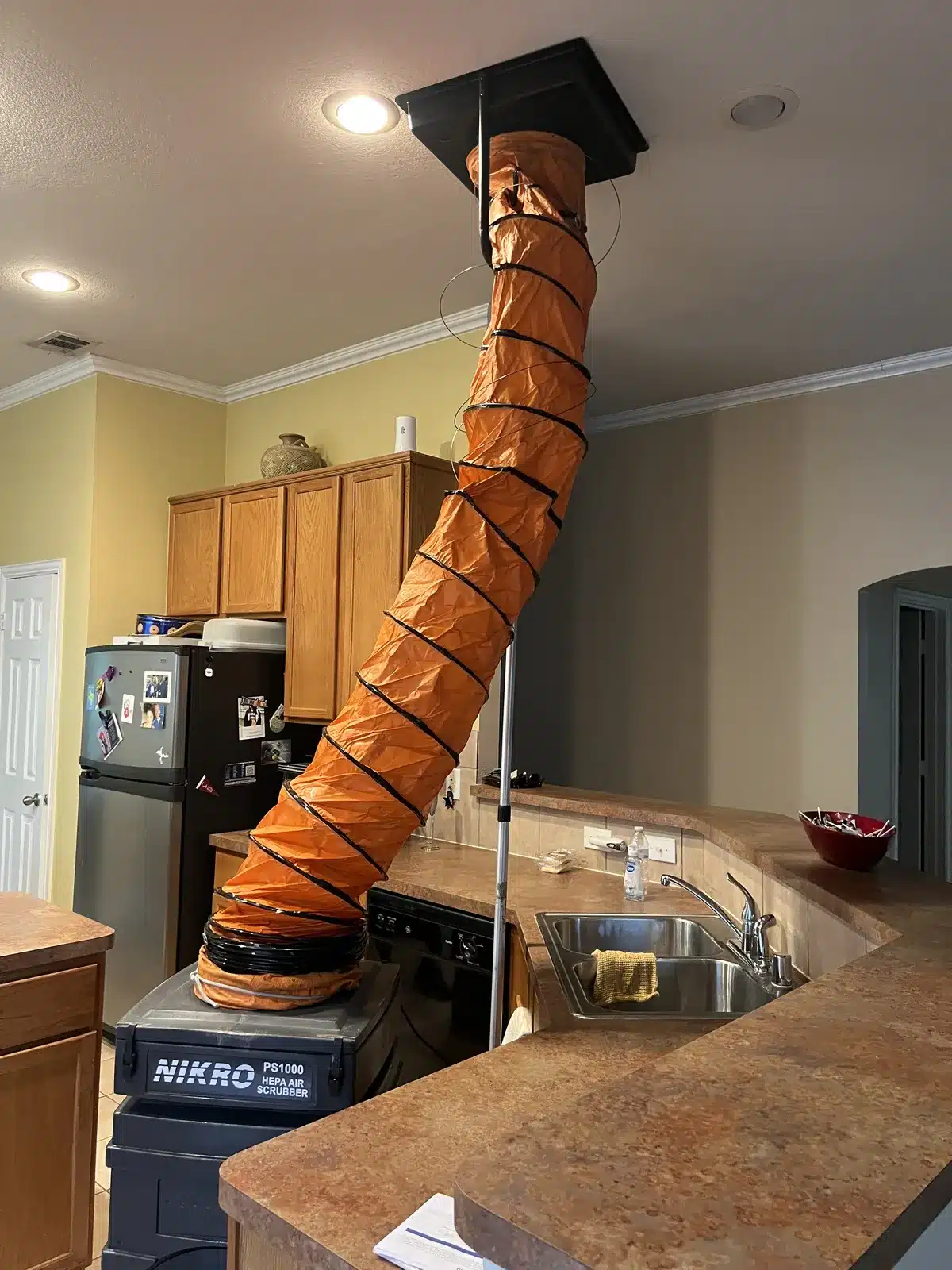
Surface cleaning removes the dust that has already settled. It does nothing about the dust still in circulation. In a typical North Texas home the ductwork sits in the attic, and the blower pushes air through those runs every time the system cycles. When the ducts are clean and sealed and the filter is doing its job, the system helps you: it captures particles and the house stays cleaner between cleanings.
But add a leak on the return side, a gap around the filter, or years of buildup inside the runs, and it works against you. Every cooling cycle stirs settled debris, pulls in attic particles, and blows the mix out of your supply registers. The dust never really left. It was just airborne.
Duct leaks and negative pressure: the attic dust pipeline
Your attic is one of the dirtiest spaces in the house: loose insulation fibers, drywall dust from the original build, years of settled dirt. Now picture a return duct up there with a torn jacket or a loose connection. The return side runs under suction, so any gap becomes a vacuum nozzle pointed at attic air, and everything it pulls in gets pushed back out through your supply vents.
Connection points fail first. The plenum box, the main box tying your unit to the branch runs, takes the most stress and the biggest temperature swings. Older ductboard plenums soften, sag, and open at the seams, shedding fibers into the airstream on top of leaking. When one is past patching, plenum box restoration rebuilds that junction so the system stops breathing attic air.
Negative pressure makes it all worse. Close a few bedroom doors while a central return runs, add a kitchen vent hood and a bathroom fan, and the house starts sucking makeup air through whatever openings it can find: recessed light housings, the attic hatch, gaps around ceiling registers. Dusty halos around can lights and dark streaks at the edges of ceiling vents are the classic signature.
Crushed flex runs and filter bypass
Most DFW homes are ducted with flex, the insulated tubing draped across attic trusses. Flex works fine when it is stretched, supported, and gently routed. It fails quietly: stepped on during a cable install, pinched over a truss, kinked into a tight corner. A crushed run chokes airflow, and slow moving air drops its dust load inside the duct until a long cooling cycle puffs it back out of the register. If one room is always dustier and always the wrong temperature, suspect the run feeding it.
Filter bypass is even more common and easier to miss. The filter only cleans air that actually passes through the media. If the filter is the wrong size for the slot, bowed from age, or seated with a gap along one edge, return air takes the shortcut around it. That unfiltered air coats your blower, coil, and supply runs, and everything downstream becomes a dust distributor.
Two tests you can run before calling anyone
You do not need a tech to tell you whether the ducts are part of the problem. Ten minutes and a paper towel get you most of the answer.
The register wipe test. Pick a supply register in a room that collects dust fast. Wipe a white paper towel along the inside of the metal boot behind the grille. A light gray smudge is normal life. Black grit, heavy fuzz, or shiny fibers that look like insulation mean the ducts are feeding the dust, not just passing air.
The filter check. Pull the filter and hold it up to a light. A filter loading evenly across its face is doing its job. One that looks nearly clean after weeks of summer runtime is probably being bypassed: the dust is going somewhere, and it is not into the filter. Check the fit and look for daylight around the frame or dust trails on the slot edges.
If either test looks bad, that is the point where it makes sense to get eyes inside the system. Our air duct services in Dallas start with an inspection and photos, so you see the inside of your runs before anyone talks about work.
The North Texas dust and pollen reality
DFW makes this problem worse than most places. Summer bakes the blackland clay until yards turn to powder that rides in on every breeze. Winter brings mountain cedar pollen drifting up from the Hill Country, and spring stacks oak pollen on top thick enough to turn cars yellow. In the fast growing corridors, think Frisco, Prosper, Celina, construction dust hangs in the air for months, and homes only a few years old can still have drywall dust from the build sitting in the runs. It is part of why requests for air duct cleaning in Frisco so often come from houses that still smell new.
The housing stock plays a role too. Older homes in Richardson, Garland, and east Dallas often run their original ductwork, with ductboard plenums and panned returns built from wall cavities that leak by design. Newer suburbs put every foot of duct in an attic that gets brutally hot all summer, which ages flex jackets and connection tape fast. Between the dust outside and the attics above, DFW ductwork earns its dirt.
FAQ
Does duct cleaning alone fix a dusty house?
Not always. Cleaning removes what has built up inside the runs. But if the source is a return leak, a failing plenum, or filter bypass, the ducts start reloading the day the system runs again. The fix is cleaning plus sealing the source, in that order.
How often should I check my filter in DFW?
Monthly during summer and during cedar season. Long cooling runtimes and heavy pollen load filters fast here. Replace it when you can no longer see light through the media, and check the fit every time you swap it.
One room is dustier than the rest. What does that mean?
Usually a problem with the specific run feeding that room: a crushed or kinked flex duct, a loose connection at the boot, or a gap around the ceiling cutout pulling attic air. Room specific dust is a duct clue, not a housekeeping issue.
If the wipe test came back ugly or one room keeps winning the dust contest, we can take a look. Local Ducts Experts is a family business here in DFW, and Dylan will give you a straight answer about whether your ducts are the problem, with photos, not a sales pitch. Call or text (469) 444-1064.