
If your duct cleaning estimate has a sanitizing line at the bottom and you are not sure whether that is a real service or a nice-smelling upsell, this is for you. Before anyone runs a fogger through your vents, you deserve a plain answer to one question: what does air duct sanitizing include, and does your home actually need it? I'm Dylan. My family runs Local Ducts Experts here in Dallas Fort Worth, and I would rather skip a sanitizing sale than sell one that does nothing.
Sanitizing Is Not Cleaning, and the Order Matters
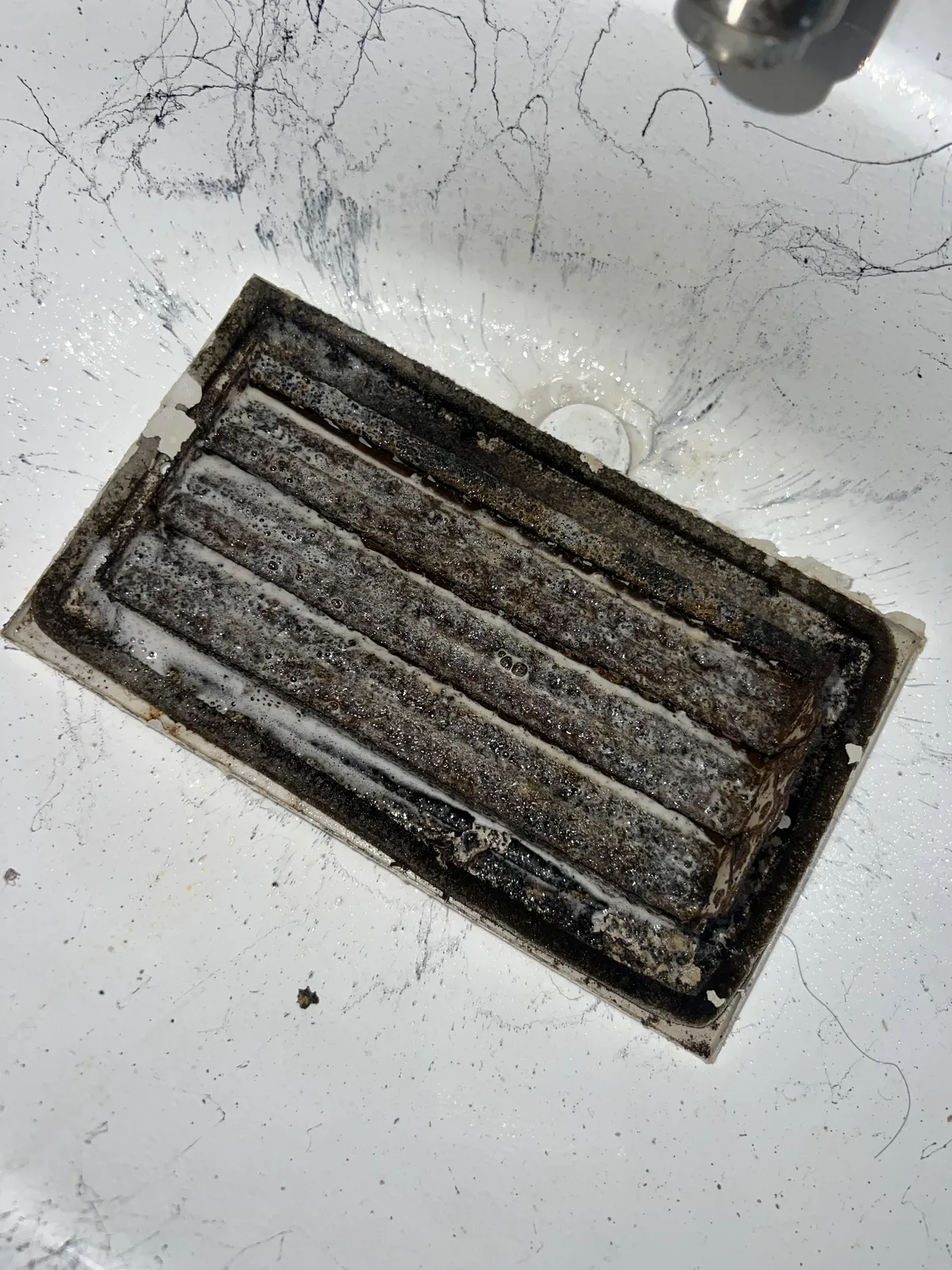
Duct cleaning is physical. Brushes and air whips knock loose the dust, pet hair, and construction debris stuck to the duct walls while a negative air machine pulls it out of the system. Sanitizing is chemical: once the ducts are physically clean, an antimicrobial product is applied to the interior surfaces to handle what vacuuming cannot touch, mainly bacteria, mildew film, and the odor sources they leave behind.
The order matters more than anything else on this page. Sanitizer sprayed into a dirty duct lands on the dust layer, not the duct itself, and leaves with the next cleaning. If a company offers to sanitize without a full air duct cleaning in Dallas first, you are paying for a pleasant smell that lasts about a week. We will not sell it that way, and neither should anyone.
Step by Step: What a Real Sanitizing Visit Looks Like
Here is the sequence on a combined cleaning and sanitizing visit:
- Inspection first. We look into the supply and return runs and the plenum box for moisture, rust, and anything that looks like biological growth. This decides whether sanitizing makes sense, and whether to fog or spot-treat.
- Full mechanical cleaning. Registers come off, each run gets agitated section by section, and the negative air machine collects the debris. Nothing gets sprayed yet.
- Prep and the product conversation. We set the system the way the treatment requires and name the exact product going into your air. You should hear that name before the fogger starts, not after.
- Application. A fog pushed through the ductwork, or direct treatment of specific surfaces, with enough dwell time for the product to work instead of just passing through.
- Air out, then run. The system sits briefly, then runs so we can confirm normal airflow.
- Walkthrough. You see what we found and what changed. If a tech cannot show you anything, question the whole visit.
On most single-system homes it adds thirty minutes to an hour on top of the cleaning. If someone tells you they can sanitize your whole system in ten minutes, that is a spray can, not a service.
Fogging vs. Surface Treatment: Which One and When
Fogging turns the product into a fine mist and pushes it through the ductwork with air movement, so it reaches the full length of every run, including flex duct interiors no brush or hand can reach. Most houses around Plano, Frisco, and the newer suburbs have flex duct snaking through a hot attic, so fogging is usually the practical choice there.
Surface treatment is direct application to spots you can actually reach: the plenum interior, register boots, sheet metal near the air handler. It fits when the problem is localized, say a musty return chase or a plenum that took on moisture. One caution: if the fiberglass lining inside the plenum is stained through or crumbling, spraying it is a bandage, and that box needs restoration, not a fog.
One thing fogging is not: permanent. It treats the system at a point in time, and if the moisture that fed the problem is still there, the smell comes back. For homes that keep growing mildew because of condensation at the coil, a UV light installed at the coil does more long-term good than repeat fogging: it works around the clock at the one spot that stays wet all summer.
When Sanitizing Is Actually Worth It in DFW
North Texas gives ducts a hard life. Spring is humid, attics are brutal by August, and the AC runs heavy for half the year. Condensation forms where cool supply air meets hot, humid attic air, and that moisture is the usual root of duct mildew here. Sanitizing earns its keep in a few specific situations:
- A musty smell when the AC kicks on that survives a proper cleaning. That smell is usually microbial, and cleaning alone does not neutralize the source.
- Multiple pets. Dander and pet odor soak into the dust film inside the ducts. Cleaning removes the film; sanitizing handles the odor left behind.
- Illness recovery or a vulnerable person at home. After a long illness, or when someone with a weakened immune system moves in, many families want the extra step. Reasonable call, not paranoia.
- A moisture event. A clogged condensate drain, a roof leak over a duct run, or weeks of sweating ducts during a wet spring. If water got in, treat the system.
- Evidence of pests. If anything was living or nesting in the ductwork, clean and sanitize. No debate.
When Plain Cleaning Is Enough, and We Will Say So
Most calls we get do not need sanitizing. Dust buildup, allergy season pollen, drywall dust after a remodel, ten years of neglect in a house you just bought in Fort Worth or East Dallas: those are cleaning jobs, full stop. Sanitizer does nothing for dust or pollen. It does not remove anything. It only treats what remains after removal, which is why it is an add-on and never a replacement.
Two more honest limits. First, sanitizing is not mold remediation. If there is visible suspected growth on drywall, framing, or insulation, that is a different trade with a different scope, and a fogger is not a substitute. Second, be wary of anyone who adds sanitizing to every ticket automatically. If the tech cannot point to an odor, a moisture history, pets, or something found in the inspection, the honest answer is no, and a good company says so out loud.
FAQ: Quick Answers About Duct Sanitizing
Is air duct sanitizing safe for kids and pets?
Applied correctly, yes. The product goes in after cleaning, with a short air-out period before the system runs normally. Ask any company to name the exact product they use and show you its safety data sheet. If they hesitate, that hesitation is your answer.
How long does the sanitizing part take?
Roughly thirty minutes to an hour on top of the cleaning itself, including dwell time and airing out. Two-system homes take longer.
How often should ducts be sanitized?
There is no calendar for it. Sanitizing is need-based: a returning musty odor, a moisture event, pests, or a health situation at home. Routine maintenance is cleaning. If nothing has changed since your last service, skip it.
If you are anywhere in the Dallas Fort Worth area and want a straight answer about your own system, read through our air duct sanitizing service page or just call and describe the smell. My family and I will tell you honestly whether you need cleaning, sanitizing, or neither. Call Dylan at (469) 444-1064.