
Every year, thousands of house fires in the United States start in the same place, the dryer vent. It is the single most overlooked maintenance item in a modern home, and the consequences of ignoring it range from a dryer that never quite dries your clothes to a full structural fire. Most DFW homeowners have never had their dryer vent professionally cleaned, and in many homes the vent has not been touched since the house was built.
In this guide, we will explain exactly what dryer vent cleaning is, why it matters far more than most people realize, and what a trained HVAC technician actually does when they come to your home.
What Is Dryer Vent Cleaning?
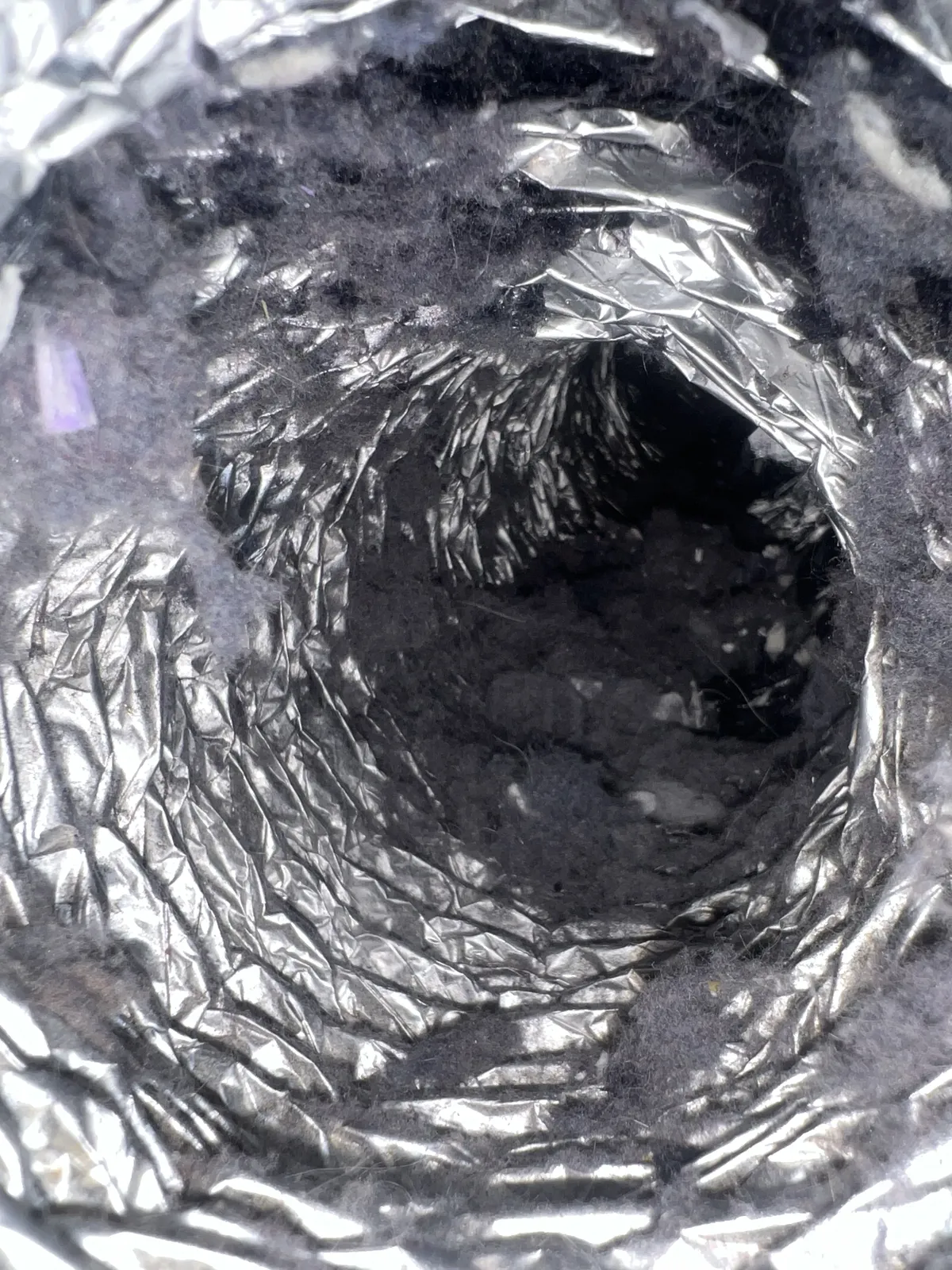
Dryer vent cleaning is the complete removal of lint, debris, and any other obstructions from the duct that carries hot, moist air from your dryer to the outside of your home. This includes the flexible transition hose behind the dryer, the rigid metal duct that runs through walls or attic space, the exterior vent hood, and any elbows or transitions along the way.
It is not the same as cleaning the lint trap. The lint trap only catches a small percentage of the fibers that come off your clothes. The rest, the part that really matters, travels into the vent line itself, where it slowly accumulates year after year until airflow is restricted and temperatures inside the vent climb toward the ignition point of the lint.
Why This Is a Safety Issue First
Dryer lint is one of the most flammable substances in the average home. When it packs into a hot, enclosed metal duct, all the conditions for a fire are present. Professional cleaning removes the fuel source before it becomes dangerous.
How the Dryer Vent Cleaning Process Works
Trained HVAC technicians follow a multi-step process to make sure the entire vent path is cleared, not just the first few feet.
Step 1: Disconnect and Inspect
The technician pulls the dryer away from the wall, disconnects the transition hose, and inspects the back of the dryer, the wall termination, and the exterior vent hood. This reveals the condition of the entire run before any cleaning starts.
Step 2: Rotary Brush From Both Ends
Using a rotary brush attached to a flexible rod, the technician works from both the interior connection and the exterior vent hood. The spinning brush scrubs lint off the interior walls of the duct while compressed air or vacuum pulls the dislodged material out.
Step 3: Exterior Hood Clearing
The vent hood on the outside of the home, usually on a wall or roof, is often the most clogged part of the system. Lint mats against the flap, bird nests form around the screen, and debris accumulates in the elbow just inside the wall. The technician clears all of this manually.
Step 4: Airflow Testing
After cleaning, the technician measures airflow at the exterior hood to confirm that the vent is moving the correct volume of air. This is how you know the cleaning was thorough, not just a guess.
Step 5: Reconnection and Final Check
The dryer is reconnected with a proper metal clamp, pushed back into position, and tested to confirm normal operation.
Signs Your DFW Home Needs Dryer Vent Cleaning
Most homeowners assume their dryer is working fine until it completely fails. Here are the warning signs to watch for long before that happens.
- Clothes take two cycles to dry instead of one
- The top of the dryer feels unusually hot during a cycle
- A burning smell when the dryer is running
- The laundry room feels humid or stuffy after drying
- Lint visible around the exterior vent hood
- The dryer shuts off mid-cycle due to overheating
- You cannot remember the last time the vent was cleaned
- You moved into the home and have no service record
- Birds or pests have been seen near the exterior vent
Any one of these is a reason to schedule a professional inspection.
Why DFW Homes Face Extra Risk
The Dallas-Fort Worth climate creates specific conditions that make dryer vent maintenance more urgent than in many other regions. First, homes run dryers more frequently year-round because of the heat, dust, and humidity, clothes do not air-dry well in the Texas summer. Second, many DFW homes have long vent runs through attic spaces where temperatures routinely exceed one hundred and twenty degrees in summer. Hot vents combined with packed lint is the exact recipe for ignition.
Third, the region has a large number of homes built during the 1980s and 1990s housing boom that use flexible foil or plastic transition hoses. These materials collapse, tear, and trap lint at a much higher rate than rigid metal duct. Many of them are still in place decades later.
Finally, DFW has a significant bird and wasp population that loves to nest in exterior vent hoods. A vent hood that is obstructed from the outside causes lint to pack against the blockage from the inside, dramatically accelerating the problem.
What to Expect From a Technician Visit
A professional dryer vent cleaning takes between forty-five minutes and ninety minutes depending on the length of the vent run and how long it has been since the last service. A trained HVAC technician will arrive with rotary brush equipment, a commercial vacuum, airflow measurement tools, and replacement clamps or transition hose if needed.
They will protect your flooring, pull the dryer out carefully to avoid damaging the gas or electric connection, and document the before-and-after condition. Expect to see photos of what came out of your vent and a written summary of what was done.
Why Professional Cleaning Beats DIY
You can buy a dryer vent brush kit at any home improvement store, and many homeowners try this route. It does remove some lint near the dryer end, but it almost never reaches the full length of the vent, and it does nothing for the exterior hood or the transitions inside the wall.
Professional equipment uses longer rods, stronger rotation, and commercial suction that a household shop vacuum cannot match. Trained HVAC technicians also spot issues a homeowner cannot, crushed duct sections, improper materials, building code violations, disconnected joints in the attic, and exterior hoods that are installed incorrectly and trap lint by design.
Attempting to disconnect a gas dryer incorrectly can cause a gas leak. Damaging the vent while probing with a brush can create hidden leaks in the wall cavity where moist air escapes and causes mold. Professional service avoids these risks.
Frequently Asked Questions
How often should I get my dryer vent cleaned?
For most DFW households, once a year is the right schedule. Homes with large families, pets, or long vent runs may need service every six months.
Will this really prevent a fire?
Removing the accumulated lint removes the fuel source that dryer fires rely on. It is the single most effective fire-prevention step for this appliance.
Will clean vents make my dryer dry clothes faster?
Yes. A restricted vent forces the dryer to run longer to achieve the same moisture level. Clean vents restore normal cycle times and reduce wear on the heating element.
Can I use a leaf blower to clean my own vent?
No. Leaf blowers push debris in the wrong direction and can damage the interior duct walls. They also do not remove lint packed at elbows.
How do I know if my vent is blocked without opening anything?
Stand outside during a dry cycle. You should feel strong warm airflow from the exterior hood. Weak airflow, or none at all, is a clear sign of blockage.
Schedule Your Free Inspection Today
If it has been more than a year since your last dryer vent cleaning, or if you have never had it done, the safe next step is a professional inspection. Our trained HVAC technicians will evaluate your entire vent path, measure airflow, and tell you exactly what your system needs.
For related services, see our city pages for dryer vent cleaning across the DFW metroplex.
Call (469) 444-1064 today to schedule your free inspection.