
Most homeowners have never heard the word plenum, but it is one of the most important components in the entire HVAC system. The plenum box is the central distribution chamber that connects your air handler to every duct in the house, and when it fails, the symptoms show up everywhere, uneven cooling, high energy bills, excessive dust, and a system that seems to run nonstop without keeping up.
In the Dallas-Fort Worth climate, plenum boxes take extraordinary abuse. Long cooling seasons, aggressive temperature swings between the attic and the conditioned space, and decades of moisture cycling all combine to degrade the plenum from the inside out. Plenum box restoration brings this critical component back to proper condition. In this guide, we will explain what it is, how it works, and why DFW homes need it.
What Is Plenum Box Restoration?
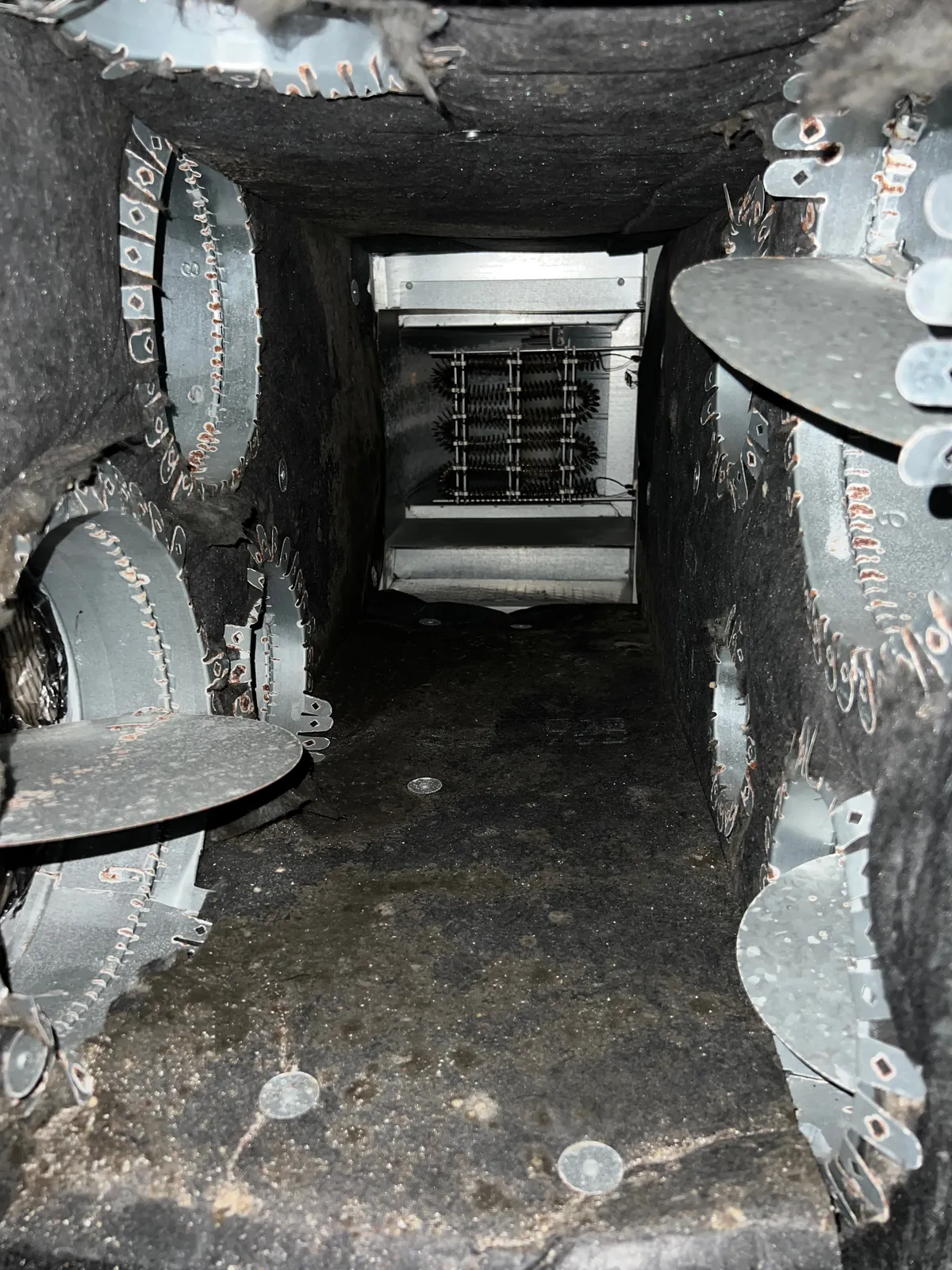
Plenum box restoration is the professional repair, resealing, re-insulating, and sometimes full rebuilding of the plenum chamber that distributes conditioned air from your HVAC unit to the supply duct system. A plenum that has deteriorated leaks conditioned air into unconditioned spaces, loses insulation value, grows mold on exposed interior surfaces, and creates massive efficiency losses.
Restoration addresses every one of these failure modes. The plenum is stripped of damaged interior lining, thoroughly cleaned, re-lined with proper duct board or sheet metal, re-insulated, and resealed with mastic and approved tapes. In severe cases, the entire plenum is rebuilt from new materials.
Why the Plenum Matters So Much
Every cubic foot of air that enters your home passes through the plenum box. If the plenum has a six-inch gap or a torn interior liner, every single air cycle is wasting energy and circulating attic contaminants into your living space.
How Plenum Box Restoration Works
Trained HVAC technicians follow a structured process to evaluate and restore a plenum safely and thoroughly.
Step 1: Full Inspection
The technician removes access panels and uses a combination of visual inspection, camera tools, and airflow testing to evaluate the condition of every interior surface, seam, and connection. This identifies the specific problems that need to be addressed.
Step 2: Containment and Demolition
Damaged interior liner, disintegrating insulation, and any microbial growth are removed. Because this material often contains years of accumulated dust and mold, the work area is contained with plastic sheeting and negative pressure to prevent contamination from spreading.
Step 3: Structural Assessment
With the liner removed, the structural sheet metal of the plenum is inspected for rust, holes, or physical damage. In some cases, the sheet metal is salvageable and can be cleaned and recoated. In others, portions must be replaced.
Step 4: Reinstallation of Lining and Insulation
New duct board liner or sheet metal lining is installed to manufacturer specifications. Proper insulation is applied on the exterior, and all seams are sealed with mastic and UL-listed tape.
Step 5: System Testing
After restoration, the system is tested for airflow, static pressure, and seal integrity. The technician verifies that each supply duct is receiving proper airflow and that no leaks remain at the plenum connections.
Signs Your DFW Home Needs Plenum Restoration
Plenum problems are often invisible but have clear symptoms.
- Rooms furthest from the unit never cool properly
- Utility bills keep rising even with the same usage patterns
- Visible water staining or rust on the plenum exterior
- Insulation falling or sagging around the unit
- Excessive dust throughout the house
- Musty smell coming from supply vents
- The AC runs constantly but struggles to keep up
- You can hear air escaping near the air handler
- Visible gaps at the plenum-to-unit connection
Any of these symptoms warrants a professional inspection.
Why DFW Homes Need This Service
Plenum boxes in DFW homes face conditions few other regions match. The attic temperatures in summer regularly exceed one hundred and thirty degrees, and the plenum sits right in the middle of that heat. On the interior, air leaving the AC coil is in the mid-fifties. That forty- to seventy-degree temperature differential across the plenum wall causes constant condensation cycles, expansion and contraction, and accelerated material fatigue.
Older DFW homes from the 1970s, 1980s, and 1990s often have plenums built with duct board, a fiberglass liner with a foil facing. Over decades, the liner deteriorates, the foil tears, and the fiberglass becomes exposed to airflow. That is when homeowners start seeing dust and fiber in their supply air.
Many DFW plenums were also installed with builder-grade tape that fails after ten to fifteen years. Once the tape releases, the seams open, and the plenum begins leaking conditioned air into the attic. The homeowner never sees it, but the AC works twice as hard to compensate.
What to Expect From a Technician Visit
Plenum box restoration is more involved than most HVAC services, and the timing depends heavily on what the inspection reveals. A straightforward restoration might take three to four hours. A full rebuild can take a full day or longer.
A trained HVAC technician will start with a thorough inspection and a clear conversation about what the plenum actually needs. Minor issues might be addressed with resealing and targeted repair. Major deterioration requires full restoration or replacement. The technician will explain the options and document the work with photos.
Expect work zones to be sealed off, the HVAC system to be off for portions of the visit, and the final result to include airflow measurements that confirm the restoration is performing correctly.
Why Professional Restoration Beats DIY
Plenum box work is not a homeowner project. The plenum sits in tight spaces, often in hot attics or cramped closets, and working inside it requires specific knowledge of HVAC airflow design.
A homeowner attempting to patch a plenum with hardware-store duct tape will almost certainly make the problem worse. Standard duct tape fails quickly at HVAC temperatures. Improper patching can also create turbulence that reduces airflow to already-struggling rooms. Adding the wrong kind of insulation can create condensation problems that lead to mold growth.
Trained HVAC technicians understand the airflow dynamics, know which materials hold up in the DFW climate, and have the training to handle fiberglass safely. They also have the tools needed to properly measure before-and-after performance so the homeowner knows the restoration actually worked.
Frequently Asked Questions
How do I know if I have a plenum problem?
Common signs include rising energy bills, uneven cooling, excess dust, and visible deterioration near the air handler. A professional inspection can confirm the condition and scope of any issues.
Can a damaged plenum be repaired, or must it be replaced?
It depends on the extent of deterioration. Minor issues like seam leaks or surface damage can often be repaired. Severe interior liner failure or structural rust may require full replacement.
Will restoration fix my uneven cooling?
If the uneven cooling is caused by plenum leakage or blocked airflow, yes. Many homeowners see significant improvement after restoration. If the cause is duct design or insulation issues elsewhere, additional work may be needed.
How long does a restored plenum last?
When restored with proper materials and professional technique, a plenum can perform for many years. Regular HVAC maintenance helps extend its life.
Does this affect my warranty?
Plenum restoration does not affect your HVAC manufacturer warranty. In fact, proper plenum condition is often required to keep the system operating within warranty specifications.
Schedule Your Free Inspection Today
If your plenum box is showing signs of deterioration, or if your home has cooling issues that no tune-up seems to fix, restoration may be what your system needs. Our trained HVAC technicians will perform a thorough inspection and give you a clear picture of what your plenum requires.
For related services, see our city pages for HVAC restoration across the DFW metroplex.
Call (469) 444-1064 today to schedule your free inspection.